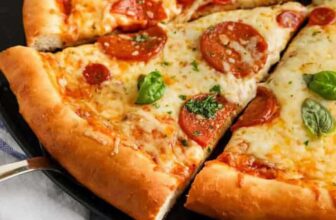
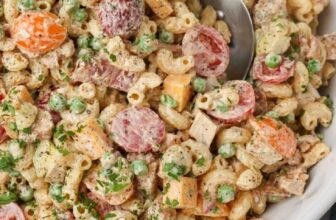
Purchaser beware: Analysis out immediately finds that individuals are usually getting extra salt than they bargained for of their quick meals.
Scientists within the UK examined the sodium content material of takeaway meals purchased from dozens of native and chain eating places within the space. The meals routinely had a large gulf between their precise and labeled quantity of salt, with practically half containing greater than marketed. The findings recommend that menu labels ought to solely be seen as a tough guideline for the degrees of salt and different vitamins you’re more likely to get from any specific meal, the researchers say.
“Customers ought to be conscious that labels are primarily indicative,” lead research creator Gunter Kuhnle, a professor of vitamin and meals science on the College of Studying, informed Gizmodo.
Dietary discrepancies
Kuhnle and his colleagues have been finding out learn how to precisely measure the vitamins we’re getting from the meals we eat for fairly a while.
Their previous work has illustrated that even naturally occurring compounds in meals can range considerably of their composition, which may have an effect on a meals’s dietary consumption from in the future to the subsequent. Subsequent, they needed to see whether or not the identical type of discrepancy may very well be seen in additional standardized meals like these offered at quick meals eating places. They targeted on sodium consumption since extreme salt is a identified danger issue for well being situations like stroke and coronary heart illness, and even a comparatively small hole within the precise and labeled salt content material of meals might have vital ripple results.
They bought 39 takeout meals from 23 eating places, together with common chains like McDonald’s and native eateries, throughout Studying, a borough in Berkshire, England. The meals included frequent gadgets like pizza, hamburgers, pasta, and sandwiches. The meals have been frozen, freeze-dried, and floor for laboratory evaluation.
Not the entire eating places included sodium labels for his or her menu gadgets. However of people who did, a lot of their meals didn’t match what was on the label, and so they normally had extra salt than anticipated. All in all, 47% of labeled meals had larger ranges of salt than declared, the researchers discovered. Some meals even had sufficient salt in a single serving to exceed the every day quantity advisable by well being authorities, particularly pasta meals (the UK recommends not more than 5 grams of salt a day, whereas the World Well being Group advises lower than 5 grams a day).
The group’s findings have been published Wednesday in PLOS One.
What to do about inaccurate labeling
Kuhnle notes that he’s not aware of U.S. meals insurance policies, together with whether or not there are any vital variations in how restaurant gadgets are generally ready.
However the research did embrace meals from many common chains obtainable stateside, equivalent to Burger King, Domino’s, KFC, and Subway. And his work has highlighted that nutrient variability in meals is a widespread challenge unlikely to be remoted to any single nation. Slight variations in how the meals is made or processed, the amount of components used for a specific meal, and portion sizes can all affect a meals’s dietary content material. So these findings are solely the most recent to showcase that menu labels shouldn’t be seen as gospel.
“Meals composition may be very variable, and that implies that labels and meals composition tables can actually solely be used as steering, however to not calculate consumption precisely,” Kuhnle stated. This isn’t only a drawback for quick meals lovers, he provides, however vitamin researchers, too. “So this info ought to be taken with the proverbial ‘pinch of salt,’ and customers—and scientists—want to just accept these limitations.”
Kuhnle and his group plan to proceed finding out this subject, with the hopes of discovering a solution to make menu labeling extra in keeping with the true world. “The core query is how we are able to incorporate this variability in labelling, but additionally in analysis,” he stated.
Within the meantime, most individuals can most likely profit from making an attempt to chop down on their salt and sodium consumption. Within the U.S. alone, it’s estimated the typical American consumes over 3,300 milligrams of sodium a day, nicely above the two,300 milligrams advisable by teams just like the American Coronary heart Affiliation.
Trending Merchandise

Vetroo AL900 ATX PC Case with 270Â...

ASUS TUF Gaming GT502 ATX Full Towe...

AULA Keyboard, T102 104 Keys Gaming...

HP 14″ Ultral Light Laptop fo...

HP 14″ HD Laptop | Back to Sc...

NETGEAR Nighthawk Tri-Band WiFi 6E ...

Logitech MK955 Signature Slim Wi-fi...

Wireless Keyboard and Mouse Combo &...

Lenovo V15 Laptop, 15.6″ FHD ...